
Pickett’s Charge
Robert Pickett was angry. His hands were firm at 10 and 2, his knuckles white, as he neared his destination: Washington, DC. A reporter on the radio read the day’s headlines:
Governor George W. Bush, who conceded the presidential election yesterday, urged supporters to remain peaceful during tomorrow’s counting of the electoral votes in Washington, DC. Some conservatives have argued that Republicans in Congress should object to the certification of Vice President Al Gore’s victory, but Bush has called several top Republicans on the Hill to urge them against such an action, citing the need for a peaceful transition of power.
Pickett turned the volume down. He had just a few miles left.
****************************************
Al Gore, the president-elect, exited his limousine. Tomorrow, he had to certify his election as president. He wasn’t sure what the process would be like. A number of Republicans had been making an issue of it and saying they would object to the certification of Florida’s electors. Gore had, after a statewide recount, only carried the state and its 25 electoral votes by 60 votes. Those 60 votes had made Al Gore president.
Today, however, he had a more pressing task. He was planning to announce a slew of cabinet appointments. His presidential transition had been hampered by the entire Florida recount, but he was determined to have the entirety of the cabinet nominated by the time he was sworn-in on January 20th. That would help speed the confirmation process along and project strength to the nation and the world.
The nominees he planned to announce today were already inside along with Vice President-elect Joe Lieberman. Richard Holbrooke, the next Secretary of State. Robert E. Hunter, the next Secretary of Defense. There would also be Leon Fuerth, the next National Security Adviser, and George Tenet, who Gore was asking to stay on as Director of Central Intelligence.
As the cold air touched his face, Gore heard the small but enthusiastic cheers coming from the rope line. Normally, he would have waved and headed inside, but there was just something about the tumult of the Florida recount made him long for the validation he saw now in the smiles of his supporters. He jogged over to shake some hands. He needed to remind himself of the joy in all of this.
He only shook two hands before Robert Pickett lifted his gun and fired two shots directly into Gore’s chest. Within seconds, Gore was on the ground. By the time Secret Service agents picked him up and rushed him to the limousine, Al Gore was dead.
****************************************
Inside the building, Joe Lieberman heard the shots but didn’t realize what they were until his own Secret Service detail grabbed him from the room and whisked him down the stairs and out the door. He was tossed into an idling SUV and rushed, sirens blaring, to his Washington residence. The surrounding streets had already been closed to traffic and agents openly carrying AR-15s paroled the perimeter.
Bill Andresen, Lieberman’s chief of staff, was riding in the SUV with Lieberman. He and Lieberman had listened as someone from the Secret Service briefed them on the events that had unfolded outside while the Vice President-elect had been waiting for Gore.
Shortly after he arrived at home, Lieberman received another phone call. This time, it was Ron Klain. Al Gore was dead. Joe Lieberman was set to become the 43rd President of the United States.
****************************************
The hours after Al Gore’s assassination were chaotic. At the White House, John Podesta interrupted Bill Clinton’s quiet afternoon in the Residence with the news that the Vice President was dead. Immediately, Clinton wanted to bring in the White House Counsel. He needed to know, constitutionally, what happened next.
Across town, Tipper Gore met the news of her husband’s death with tears.
The White House Counsel informed Clinton that as far as possible ways this could’ve gone, the assassin had picked the easiest time to strike from a Constitutional perspective. Tomorrow, Congress would convene and read aloud the results of the Electoral College vote. Then, they would certify them. Al Gore would be declared the president-elect and Joe Lieberman the vice president-elect, but, given today’s events, Joe Lieberman would assume the office on January 20th. Then, he would be able to name a vice president who would be subject to a confirmation process as laid out by the 25th Amendment and employed twice in the nation’s history.
Clinton got in touch with the new incoming president (“president-elect” hardly seemed the appropriate term) and they spoke for a few minutes. Lieberman had been one of the fiercest critics of Clinton’s conduct during the Lewinsky scandal. Clinton was none too pleased to be passing the office off to him. He thought Al Gore should’ve chosen Bob Graham as his running mate. If he had, Clinton reasoned, Florida wouldn’t have come down to a mere 60 votes, and maybe Al would still be alive…
The president was taken aback when he asked Lieberman if he planned to address the country that evening. Lieberman did not, he said. He would be observing Shabbat as he always did. Going on television hardly counted as the kind of situation upon which lives would rest. Instead, Lieberman would speak Saturday – after night had fallen and Shabbat had ended.
Clinton didn’t understand most of that, but he figured it made it easy enough for him to deliver his own primetime address in which he would urge the conservatives who planned to object to the certification to forget their craven political interests for the sake of the peaceful transfer of power. He also laid out in plain terms how the Constitution accounted for the present moment. Lieberman did not watch the speech live. Instead, he watched a recording of it after.
****************************************
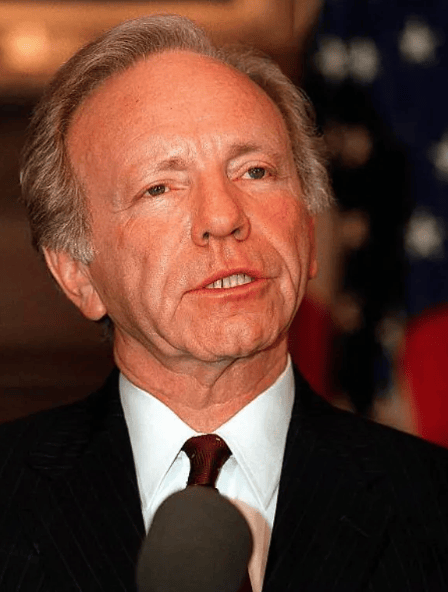
When the time came on Saturday, Joe Lieberman stepped up to the podium and addressed the nation.
My fellow Americans:
Yesterday, America lost its next president, and I lost a dear friend.
I knew Al Gore for 15 years. He was a man of courage and conviction. He volunteered for Vietnam. He was a man of vision and values who, along with his wonderful wife Tipper, called on America to live by its highest ideals and find again its moral center. He was a man of decency and civility, and so I think that is why this moment feels so heavy.
We do not yet know his assassin’s motive, but we do know that over the course of this painful election season, trust and confidence in government and our institutions have eroded. An attack on the rightful winner of the election has interrupted the peaceful transition of power.
That is not the America we know. We are a country of the ballot – not the bullet.
I am grateful that today Congress certified the results of the election. We know this campaign was close and hard-fought. I know that about half of our country voted for the other party. I recognize that no one made their decision with this situation in mind. I am humbled by that.
The road ahead will not be easy, but the path we must take is clear. It is time for all of us elected officials in government to restore the people’s faith in us. As your next president, much of that responsibility falls upon me. I promise you to lead with honesty, transparency, and to restore the moral character of this nation.
Between now and January 20th, I ask for your prayers and your support. This was not an office I sought, but this is a moment for which I knew to be prepared. With your good thoughts and blessings, our brightest days can lie ahead.
Thank you, good night, and God bless America. [1]
>>>>>>>>>>>>>>>>>>>>>>>
[1] The speech contents are based on Lieberman’s 2000 convention speech and 2012 farewell speech.
 Matters of Fact in Fiction
Leave a comment